The best self-defense skills are the ones you can actually remember and apply when your heart rate spikes.
Mixed Martial Arts has a reputation for being intense, but real-world self-defense training is rarely about wild exchanges or flashy knockouts. It is about simple decisions, repeatable mechanics, and learning how to stay safe when distance closes fast. In our classes, we teach striking, clinch, and ground skills together so you are not guessing what to do when a situation changes.
If you are in Orange, MA and looking for practical training, the biggest advantage of Mixed Martial Arts is coverage. You learn how to protect yourself standing up, how to handle grabbing and pressure in close range, and what to do if you end up on the ground. We keep it realistic, but we keep it responsible, too, because consistency matters more than bravado.
A lot of people also want the same thing: to feel safer without turning training into a beatdown. That is why our approach is safety-first, family-friendly, and built for longevity. You can train hard, learn real skills, and still go to work or school the next day.
Why Mixed Martial Arts works for everyday self-defense
Self-defense is unpredictable. Distance changes, surfaces are uneven, and adrenaline makes fine motor skills disappear. Mixed Martial Arts training helps because it focuses on high-percentage fundamentals that hold up under stress.
We build your skill set around three ranges:
• Striking range: managing distance, defending punches, and using simple counters
• Clinch range: controlling posture and hands when someone grabs or crowds you
• Ground range: escaping pins, standing back up safely, and controlling if you cannot leave yet
That range-by-range structure matters because many “self-defense” plans fall apart the second an encounter shifts. Realistically, if someone grabs your hoodie, bumps into you, or tackles your legs, the game changes. Our job is to make sure you have answers.
Technique family 1: Distance management and getting off the line
Before we talk about hits or takedowns, we start with the boring-sounding skill that saves people the most: distance management. In practical terms, it means you can create space, keep your balance, and avoid getting cornered.
Your stance, your base, your exit plan
A good stance is not about looking tough. It is about being stable enough to move. We teach a balanced stance that lets you step forward, backward, and sideways without your feet crossing or your weight tipping. That base also supports your guard so your hands are naturally in a protective position.
We also coach you to think in angles, not straight lines. Backing up in a perfectly straight line is how people get run down. Angling out, circling, and stepping off the center line are small habits that add up quickly.
Guard, vision, and simple protection under stress
In self-defense, your hands should do two things at once: protect and prepare. We teach a high guard that protects your head and gives you a reliable “home base” when you are startled. From there, you can see what is happening, keep your chin tucked, and make cleaner decisions.
This is one of those things that feels almost too simple in class, and then you realize how much it matters when fatigue hits. Distance and guard are the difference between panic and purpose.
Technique family 2: Practical striking you can repeat
Striking for self-defense should be simple, direct, and low-risk. We lean on fundamentals from Muay Thai and kickboxing because the mechanics are efficient and the tools are easy to scale for different body types.
The jab-cross and why straight lines win
The jab and cross are not fancy, but they are fast, accurate, and structurally strong. We teach you to hit without overcommitting your balance, and we teach you to bring your hands back to safety after each strike. In Mixed Martial Arts training, the “after” matters as much as the “hit,” because you might need to move, clinch, or disengage immediately.
We also focus on targets that make sense for self-defense. You do not need a spinning technique. You need something you can land while breathing hard.
Low kicks and push kicks for space and stability
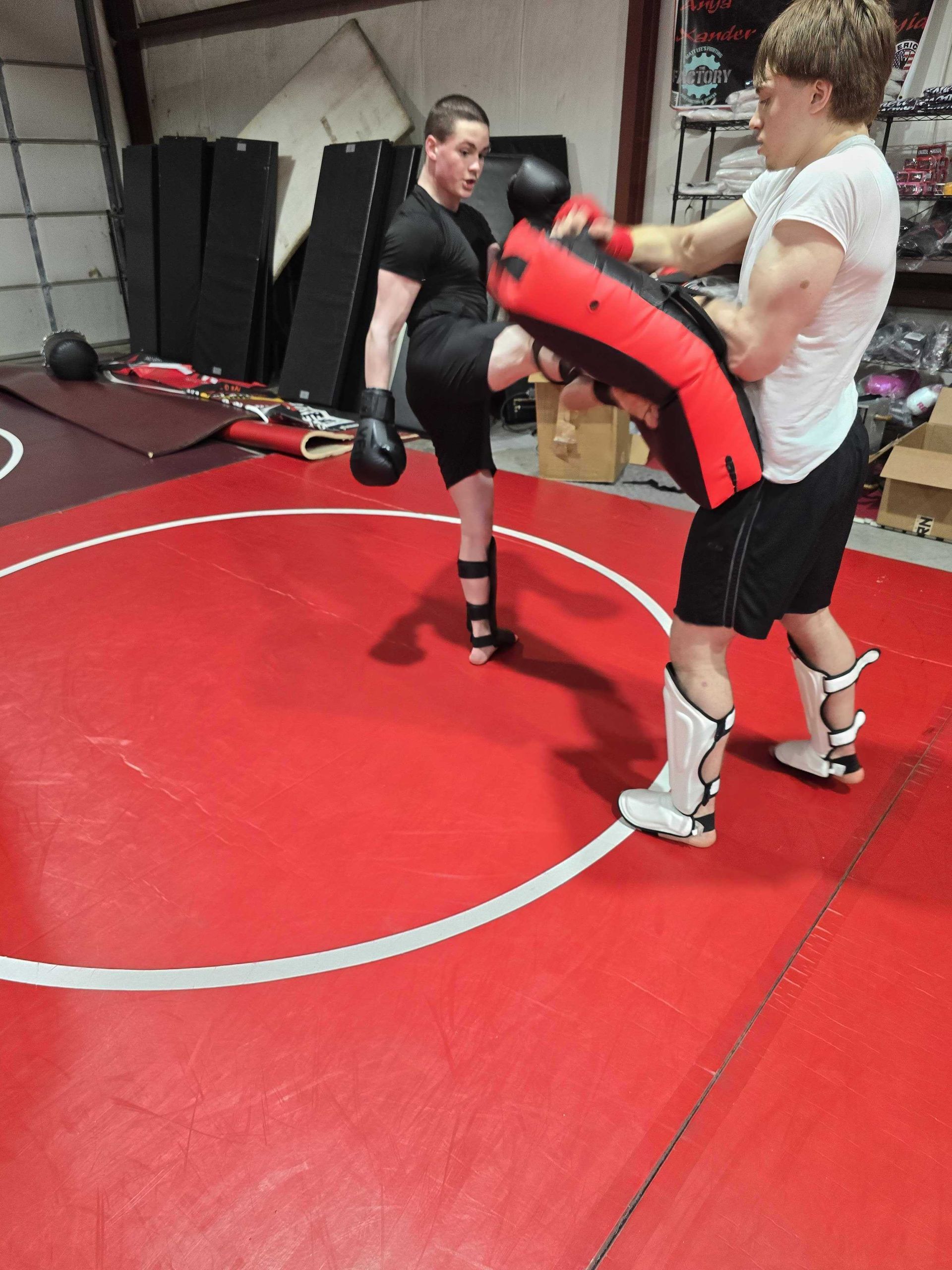
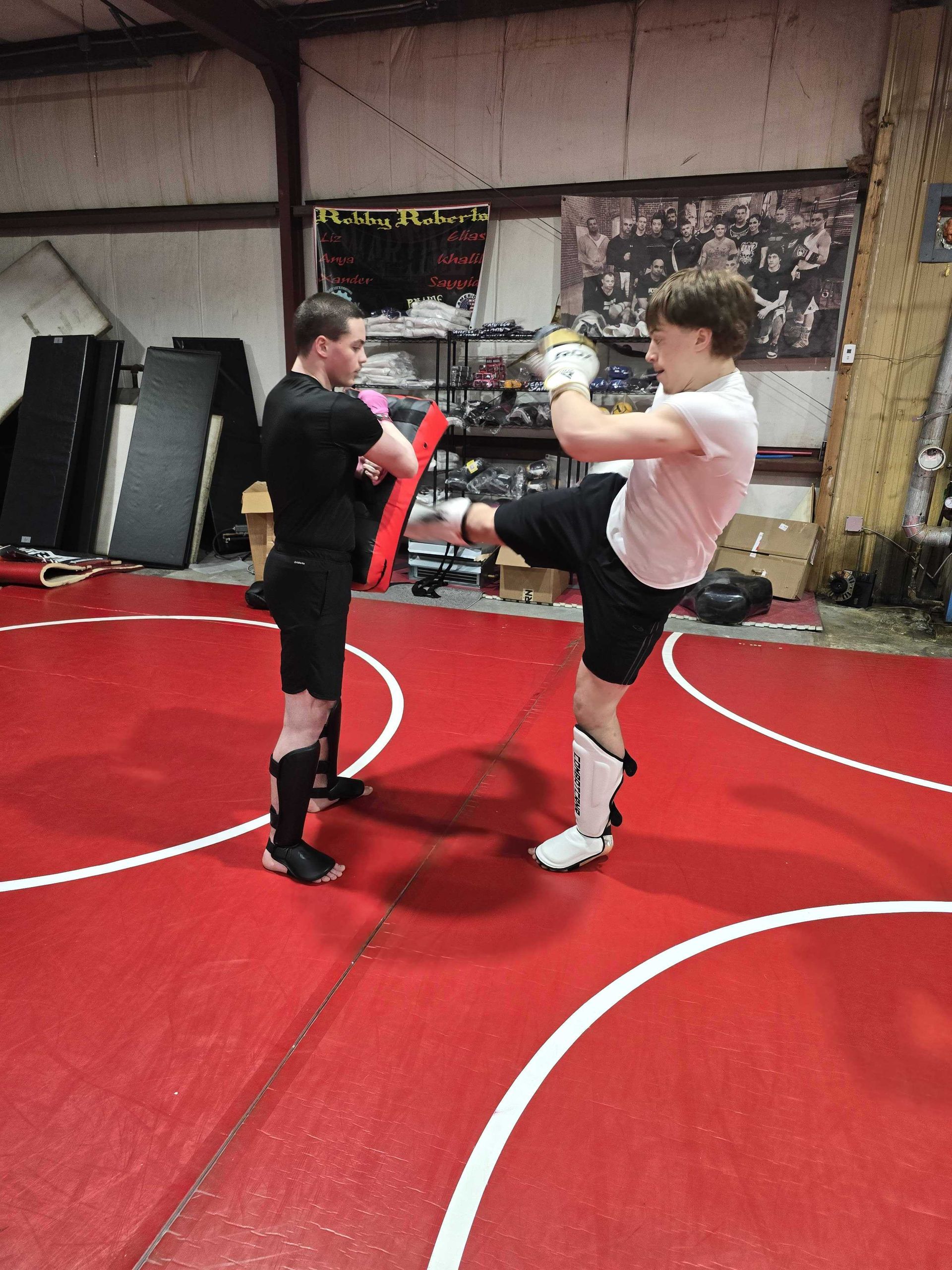
High kicks look cool, but they come with a cost: balance risk. For self-defense, we prefer low round kicks to the thigh to disrupt stance and limit forward pressure. We also teach push kicks, often called teeps, to create space when someone is closing distance.
The goal is not to trade damage. The goal is to interrupt, create a moment, and leave when you can.
Close-range tools: knees and elbows
When someone is too close to punch cleanly, knees and elbows become important. We teach them with control and context, because close-range striking often overlaps with clinch skills. You learn how to frame, keep posture, and deliver compact strikes without losing your base.
This is also where students realize how valuable training can be even without constant heavy contact. Pads, bags, and structured drills let you build real mechanics without turning practice into chaos.
Technique family 3: Clinch control and takedown defense
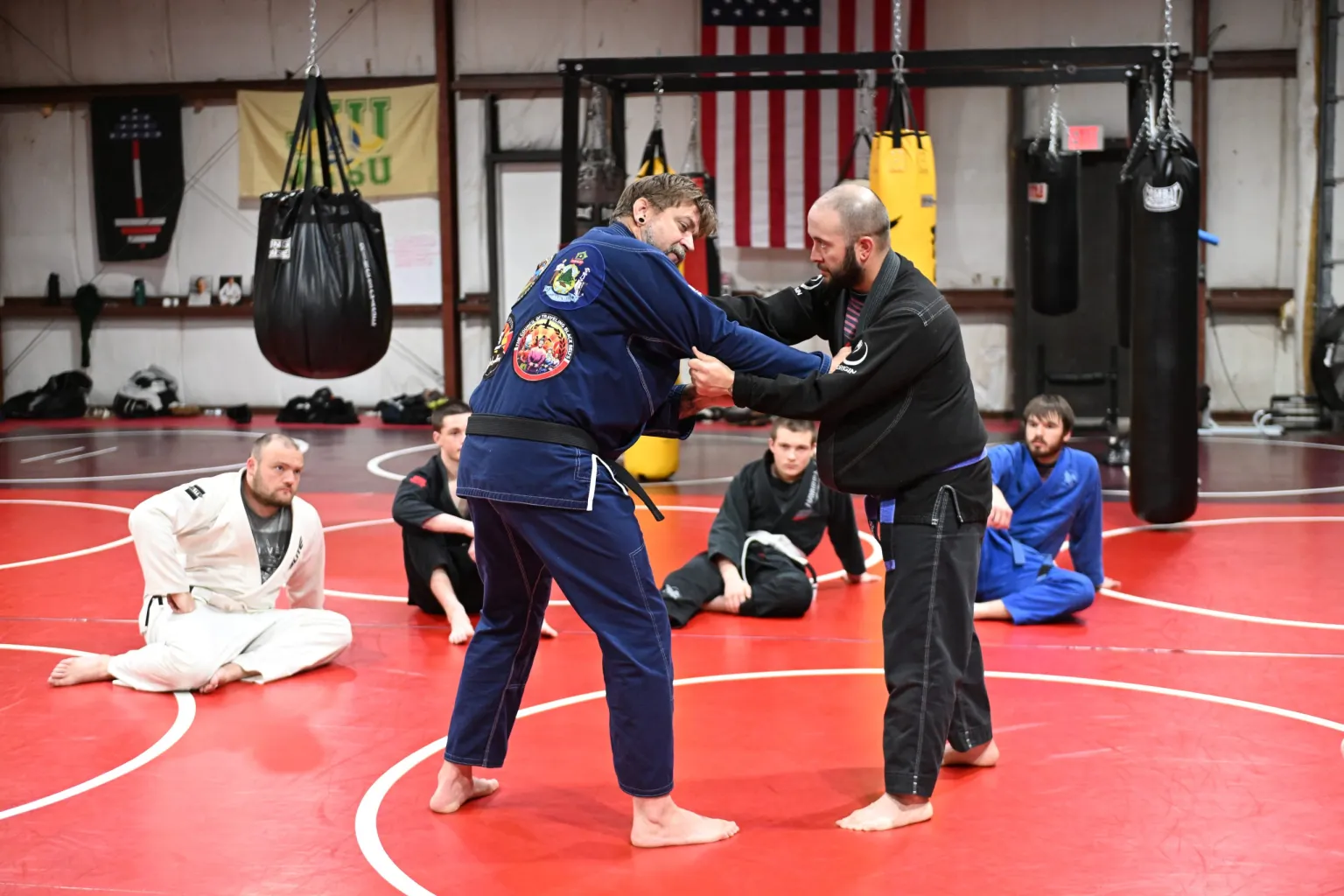
A lot of real confrontations start with grabbing. Someone reaches for your wrist, hooks an arm around your shoulders, or crowds into your space to bully you. Clinch training gives you answers when the distance disappears.
Hand fighting, pummeling, and posture
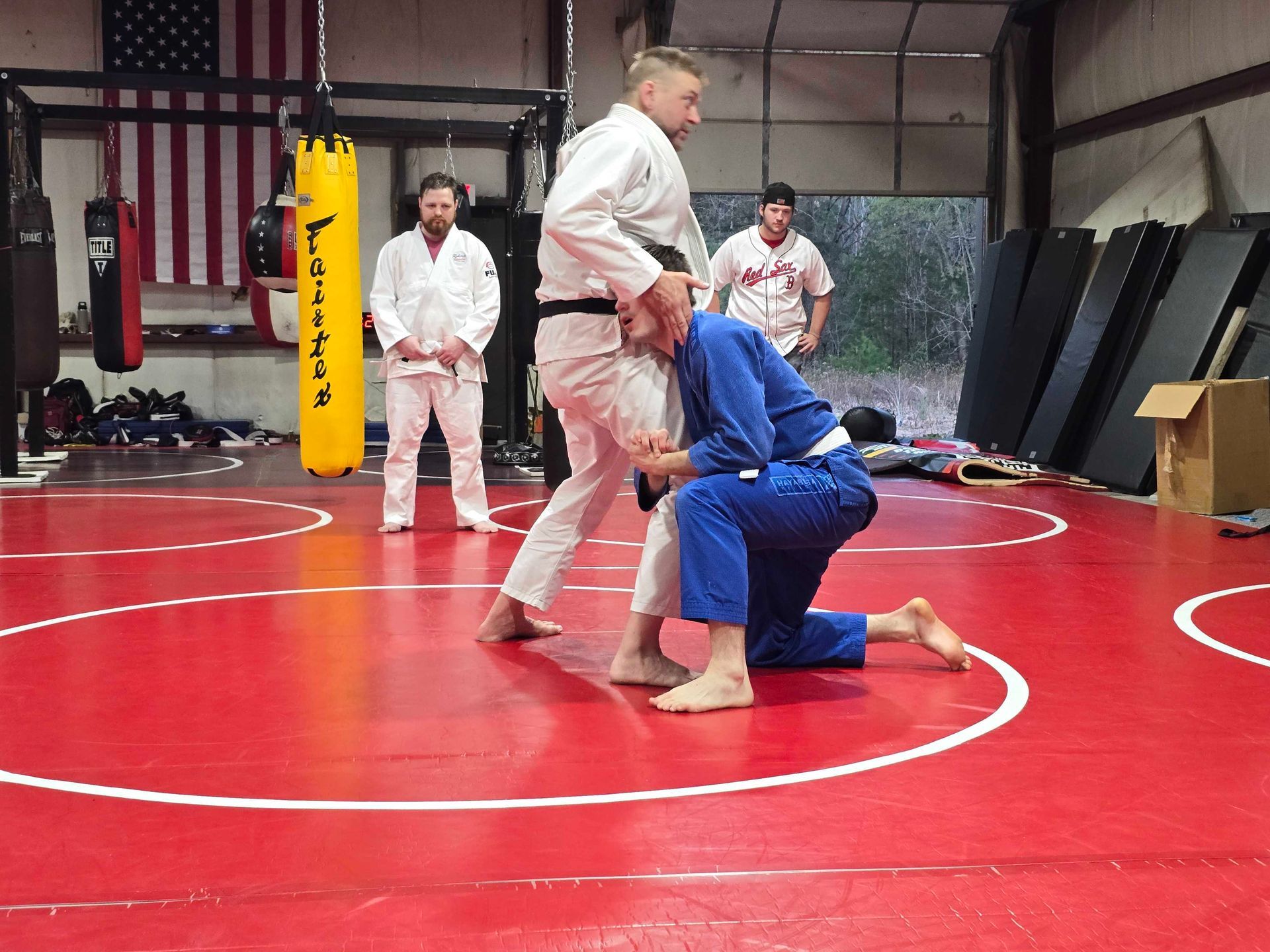
We teach pummeling drills and basic hand fighting so you can win inside position. Inside position means your arms and posture are set up to control, not just react. Underhooks, head position, and strong posture make it harder for someone to drag you around.
This is one of those moments where students feel a shift: you do not need to be the bigger person to be hard to control. You need alignment, leverage, and practice.
Sprawling, posting, and staying on your feet
Takedown defense starts with awareness and ends with base. We teach sprawls, hip pressure, and posting concepts so you can defend your legs and keep your balance. We also work on framing and turning so you can peel off and create distance.
Mixed Martial Arts is valuable here because it does not pretend the clinch is rare. We train it on purpose, not as an accident.
Technique family 4: Ground survival, escapes, and standing back up
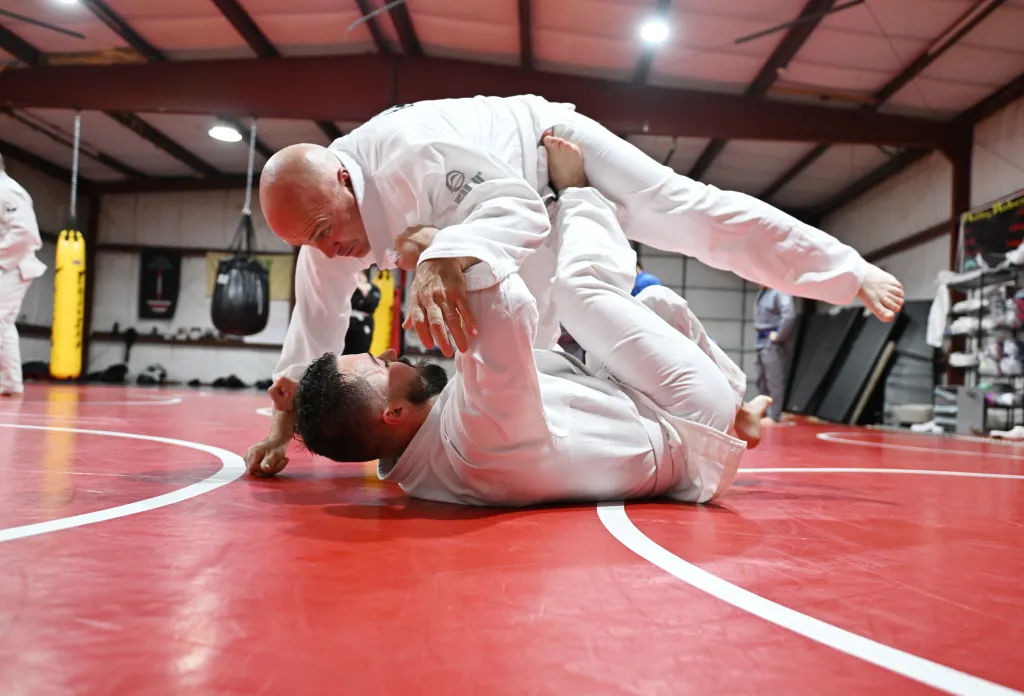
Nobody wants to end up on the ground in a self-defense situation. But if it happens, you should not be helpless. Our Brazilian Jiu-Jitsu foundation gives you a “safety net” for worst-case scenarios.
Technical stand-up: the skill that changes everything
If you only learned one ground skill, technical stand-up would be high on the list. It teaches you to stand up while protecting your head, keeping distance with your legs, and staying balanced. Instead of scrambling straight to your feet and eating a punch, you learn a safe, structured way to get up.
We drill it until it feels natural. That repetition is the point.
Hip escape and creating space under pressure
Hip escaping, often called shrimping, helps you move your hips away from pressure to recover guard, build frames, or find an exit. It is not glamorous, but it is essential. If someone is on top of you, space is oxygen.
We teach you to frame with your forearms, keep your elbows in, and move your hips rather than trying to bench-press someone off you. Smaller students tend to love this once it clicks, because it is leverage-based, not strength-based.
Mount and side control escapes
We spend time on core escapes from common pinning positions:
• Bridge and roll options when someone is mounted and your posture is compromised
• Elbow-knee escapes to recover guard when you can create a wedge
• Side control framing to stop crossface pressure and rebuild your base
The self-defense focus is simple: get unpinned, get space, stand up, and leave. Submissions exist, but we treat them as last-resort tools, not the first plan.
Control positions when leaving is not immediate
Sometimes, the safest outcome is controlled restraint rather than trading punches. We teach positional control like mount control and back control so you can stabilize a situation if you cannot immediately disengage, especially in scenarios where protecting a family member or creating time to get help is the priority.
Again, Mixed Martial Arts training helps because it combines the idea of controlling someone with the reality that strikes and chaos exist. You learn to protect yourself while you control.
Technique family 5: Awareness, boundaries, and de-escalation
The best self-defense win is the one you avoid. We coach situational awareness and de-escalation as part of training culture, not as an afterthought.
What we practice beyond the physical
We want you to be able to spot trouble early and make clean decisions. That includes:
• Recognizing pre-attack cues like aggressive closing distance and repeated boundary testing
• Using clear verbal boundaries, calm tone, and confident posture
• Keeping your hands in a non-threatening “ready” position that still protects you
• Understanding proportional response: enough to get safe, not more than needed
This is where our “no bullies” mindset matters. Training should build confidence and restraint together.
What training looks like in our martial arts school in Orange, MA
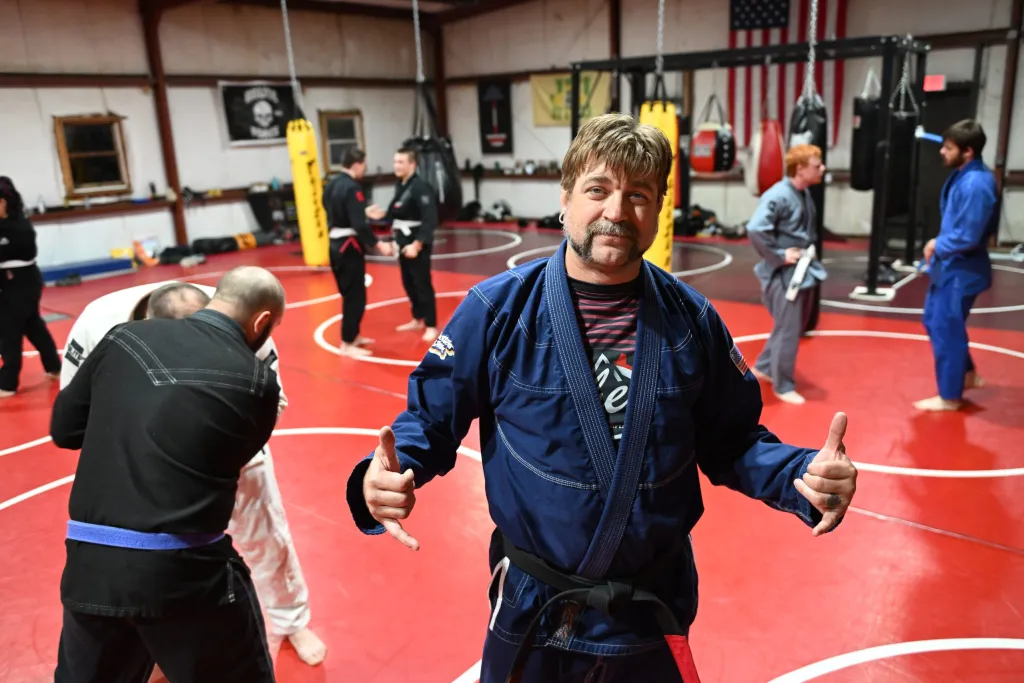
People often assume you walk into an MMA gym and immediately start brawling. That is not how we run our floor. We coach progressive learning: warm-up, technical instruction, drills, and optional controlled sparring only when you are ready and properly equipped.
In most classes, you spend more time building skills than testing them at full speed. Pads and bags help you develop striking mechanics. Partner drills help you learn timing and positioning. Grappling rounds start from specific positions so you can practice escapes and control with clear goals instead of randomness.
We also keep a close eye on safety. When contact is involved, approved protective gear is required, intensity is supervised, and we prioritize long-term health, especially head safety. You can train Mixed Martial Arts in a way that makes you sharper without making you reckless.
Youth martial arts in Orange, MA: self-defense without the “tough guy” vibe
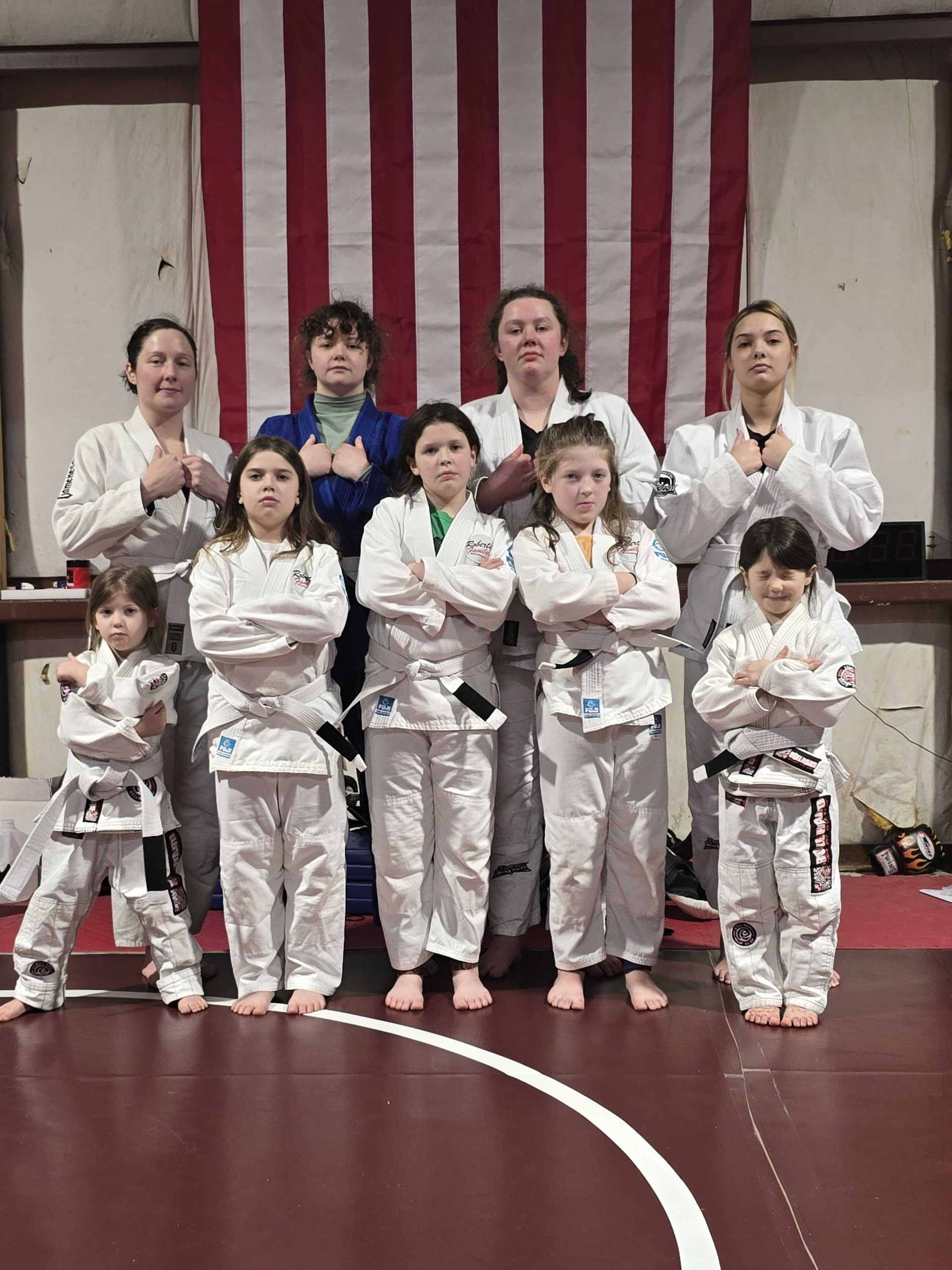
Parents usually want two things at once: practical skills and a positive environment. Our youth martial arts Orange MA program is built around that balance, starting at age 5. We teach kids how to move, fall safely, control their space, and build confidence in a structured setting.
We also spend time on the habits that carry into school and home: listening, discipline, respectful behavior, and staying calm under pressure. Kids learn that self-defense is about getting safe, not showing off. The physical skills matter, but the character side is what makes the training stick.
Common questions we hear before your first class
Is this training too violent for beginners?
Is this training too violent for beginners?
No. Our classes are structured and coached. You learn technique first, then controlled application. The goal is practical skill development, not punishment.
Will I or my child get hit in the face?
We do not run everyday training like constant face contact. Most striking work is done on pads, bags, and controlled drills. If sparring is introduced, it is gradual, supervised, and requires approved protective gear.
Do I need to be in shape first?
You do not need to be fit to start. Training is how you build fitness. We meet you where you are, and your conditioning improves naturally as you practice.
What makes this “real” self-defense?
It is the combination: stance and movement, simple striking, clinch solutions, and ground escapes rooted in Brazilian Jiu-Jitsu and Muay Thai. Mixed Martial Arts gives you a complete framework instead of a single-range answer.
Take the next step with Roberts Family Mixed Martial Arts
If you want self-defense skills that feel practical, our training is built around fundamentals that hold up under pressure: distance management, reliable striking, clinch control, and ground escapes you can actually remember. We keep the environment family-friendly, safety-first, and focused on steady progress, whether you are an adult training for confidence and fitness or a parent looking for youth martial arts in Orange, MA.
Roberts Family Mixed Martial Arts is here in Orange with programs that blend Brazilian Jiu-Jitsu and Muay Thai into modern Mixed Martial Arts training, taught with a clear standard: no bullies, no ego, and no unnecessary damage in the name of learning.
Experience how jiu jitsu builds resilience and discipline by joining a free jiu jitsu class at Roberts Family Mixed Martial Arts.
ACCESS OUR SCHEDULE
& EXCLUSIVE WEB SPECIAL
Secure your spot and get started today with our EXCLUSIVE offer!